
Dubai Visa Rejected? Here’s Your Step-by-Step Recovery Plan
TL;DR
The Quick Verdict
If your Dubai visa is rejected, do not immediately reapply with the same documents. First, identify the rejection reason (often related to passport validity, previous unused visas, or blurry scans), rectify the specific error, and then reapply through a reputable agency like DubaiVisaIndia to ensure a professional review of your application before submission.
You’ve booked the hotel with the Burj Khalifa view, your itinerary is packed with desert safaris and gold souk tours, and your bags are practically packed. Then, the email arrives: Dubai visa rejected. It feels like a door slamming shut on your vacation before it even started. But here is a surprising fact: a significant percentage of Dubai visa rejections aren't due to serious legal issues, but rather simple, avoidable clerical errors or administrative overlaps.
In this guide, we are going to walk through exactly what happens when your Dubai tourist visa is rejected, how to decode the vague reasons provided by authorities, and the concrete steps you can take to turn that "No" into a "Yes." We’ll cover everything from technical glitches to documentation nuances so you can get back to planning your trip.
01Don’t Panic: Understanding the Reality of Rejection
First, take a deep breath. A Dubai visa rejection is rarely a permanent ban. In the world of international travel, the UAE is actually one of the most welcoming destinations, but their security and administrative protocols are incredibly precise. Most "rejections" are actually "returns" for correction.
According to travel industry insights, nearly 10% of independent visa applications face some form of delay or rejection, often because the applicant didn't realize that the UAE immigration system uses highly sensitive Optical Character Recognition (OCR) software. If a scan is slightly blurry, the system simply flags it. It’s not personal; it’s procedural.
The Takeaway: A rejection is a hurdle, not a wall. Your goal now is to find the "glitch" in your previous application.
02Common Reasons for Dubai Visa Rejection
To fix the problem, you have to diagnose it. While the immigration office doesn't always provide a detailed paragraph explaining their decision, most rejections fall into these categories:
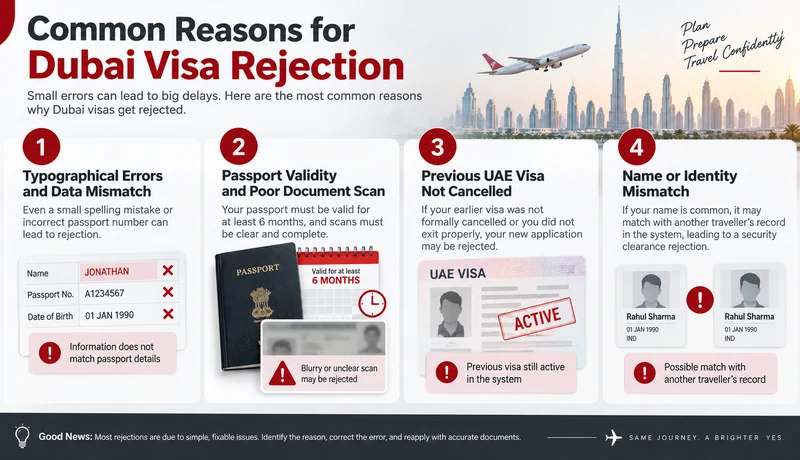
Typographical Errors and Data Mismatches
This is the most common culprit. If your name is spelled "Jonathon" on your passport but you typed "Jonathan" on the form, the system will trigger a mismatch. Similarly, if your passport number is entered incorrectly by even one digit, it’s an automatic rejection.
Passport Validity and Quality
The UAE is strict about the 6-month validity rule. If your passport expires in five months and three weeks from your intended date of entry, you will be rejected. Furthermore, if your passport scan is pixelated or if the "Machine Readable Zone" (the two lines of text at the bottom of the photo page) is cut off in the photo, the application won't pass the automated check. You can see the full list of Dubai visa requirements here to double-check your documents.
The "Uncancelled" Previous Visa
Did you visit Dubai recently? If you had a previous visa and it wasn't officially cancelled by the sponsor, or if you didn't "exit" the system properly, your new application will be rejected. The system thinks you are still in the country or already hold a valid permit.
Similar Names and Blacklists
If your name is very common (e.g., Rahul Sharma or Amit Kumar), there is a chance someone with the same name and date of birth has a criminal record or an overstay flag in the UAE. This leads to a "Security Clearance" rejection. This sounds scary, but it’s usually resolved by providing additional identification like a National ID or an older passport.
"Many travelers assume a rejection is a judgment on their character, but in the UAE, it's often just a data conflict. Resolving a 'Security Clearance' issue is frequently as simple as proving you aren't the 'other' person with your name." — Sarah Jenkins, Senior Travel Consultant.
03Immediate Next Steps After Rejection
Once you receive the news, follow this protocol to save time and money:
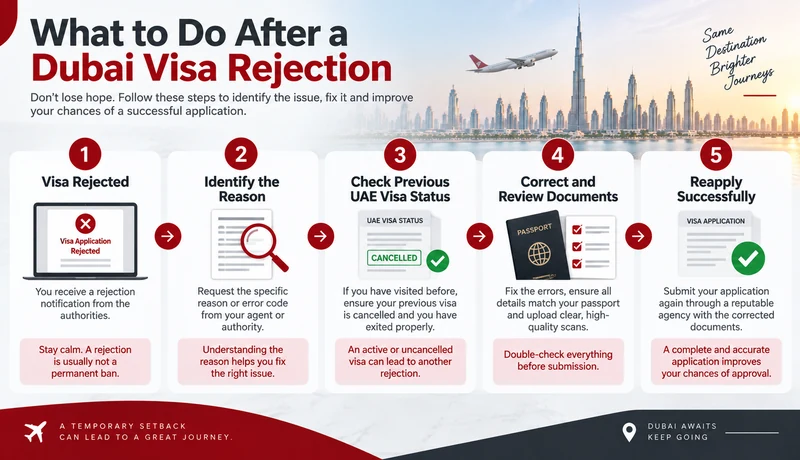
Step 1: Request the Rejection Code
Ask your travel agent or the entity that processed your visa for the specific reason or error code. Agencies like DubaiVisaIndia can often provide more context than a generic automated email, helping you understand if the issue was your photo, your profession, or a security flag.
Step 2: Check Your Exit Status
If you have been to the UAE before, verify that your previous visa was cancelled. You can check your status on the official ICP Smart Services portal. If it shows as "Active," you must contact your previous sponsor to cancel it before reapplying.
Step 3: Audit Your Documents
Open the files you uploaded. Are they clear? Is the background of your photograph white? Are there any shadows on your passport page? If you find even a tiny blur over your birthdate, that is likely your reason.
The Takeaway: Never reapply immediately with the exact same set of documents. You are essentially paying for a second rejection.
04Professional vs. Personal Applications
A major reason for Dubai tourist visa rejected cases is applying through "unauthorized" or "budget" portals that don't offer a human review. When you apply through DubaiVisaIndia, your documents undergo a "Pre-Check" phase. Experts look at your profession, your age (minor travelers or young solo female travelers often need specific additional documentation), and the clarity of your scans.
For example, if you are a freelancer but listed "Unemployed," your risk of rejection increases. A professional service can advise you on the correct "Profession" category to select based on the UAE's official guidelines.
05How to Reapply Successfully
If you've identified the error, here is how you move forward:
- Wait for the System to Clear: Wait at least 24–48 hours after a rejection before a new application is lodged to ensure the immigration system has updated your file status.
- Get High-Resolution Scans: Use a flatbed scanner rather than a phone camera. Ensure the edges of the passport are visible.
- Clear Your "Overstay" Record: If you overstayed on a previous visit, you must pay your fines before a new visa can be issued. This is a non-negotiable rule.
- Change Your Sponsor: If your visa was rejected through an airline or a hotel, try applying through a specialized visa service. Different sponsors have different "quotas" and "trust scores" with the immigration department.
The "Security Cleared" Reapplication
If your rejection was due to a name match (Security Reasons), your reapplication should include a "Clearance Request." This often involves submitting a copy of your PAN card, Aadhaar, or a previous visa from a country like the USA, UK, or Schengen area to prove your travel history and identity.
06Dealing with Financial Losses
The hardest part of a Dubai visa rejection is the financial hit. Most visa fees are non-refundable. This is why we recommend:
- Don't book non-refundable flights: Wait until you have your visa in hand.
- Use a Visa Specialist: While there is a fee, the cost of a specialist is much lower than the cost of two or three rejected applications and a missed flight.
"The UAE immigration system is highly digitized. While this makes processing fast, it makes it unforgiving of small errors. A human eye at the pre-submission stage reduces rejection rates by nearly 95%." — Official DubaiVisaIndia Documentation Expert.
07Key Takeaways for a Successful Dubai Visa
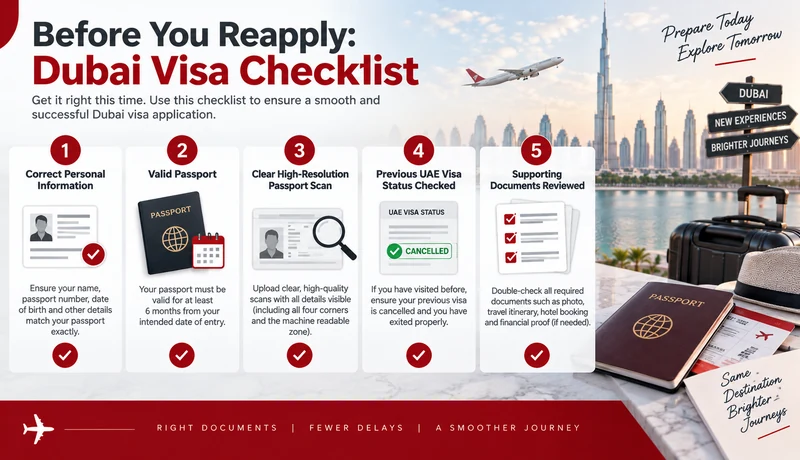
- Check Validity: Ensure your passport has at least 6 months of validity from the date of travel.
- Scan Quality: Use high-resolution, color scans of the first and last pages of your passport.
- Photo Specs: Use a recent passport-sized photo with a white background; no spectacles or headgear (unless for religious reasons).
- Previous Visas: Ensure all previous UAE visas are cancelled or expired and that you have exited the country.
- Professional Help: Use a dedicated service like DubaiVisaIndia to navigate complex cases, especially for solo travelers or those with common names.
08Conclusion: Your Path to Dubai
A Dubai visa rejected notification is a setback, but it’s rarely the end of the story. By systematically identifying the cause—whether it’s a blurry scan, a name mismatch, or an uncancelled previous visa—you can rectify the issue and reapply with confidence. Remember, the goal of the UAE immigration authorities is to facilitate tourism, not block it; they just need the right information in the right format.
Your next step? Don’t leave it to chance again. Let the experts review your case, fix the errors, and handle the bureaucracy for you.
Ready to get your Dubai travel plans back on track? Visit DubaiVisaIndia.com today and let our specialists ensure your next application is a success.
09Frequently Asked Questions (FAQs)
1. Can I get a refund if my Dubai visa is rejected?
Generally, visa application fees are non-refundable, as the fee covers the processing work performed by the immigration department, regardless of the outcome. This is why it is crucial to ensure your application is perfect before submitting.
2. How many days should I wait to reapply after a rejection?
There is no legal waiting period, but it is recommended to wait 2 to 3 business days to allow the system to clear your previous record. More importantly, do not reapply until you have addressed the specific reason for the initial rejection.
3. Does a Dubai visa rejection affect my applications to other countries?
Usually, no. A UAE tourist visa rejection is administrative and does not carry the same weight as a rejection from a Schengen country or the USA, which often requires you to declare previous rejections. However, always be honest on future travel forms.
4. Can I appeal a Dubai visa rejection?
There is no formal "appeal" process for tourist visas. The "appeal" is effectively submitting a new application with corrected information or additional supporting documents that resolve the initial concern.
5. Why was my visa rejected when my friend’s was approved?
Even if you applied together, individual factors like your specific profession, your previous travel history, the clarity of your specific document scans, or even a name match with someone on a security list can lead to different outcomes.